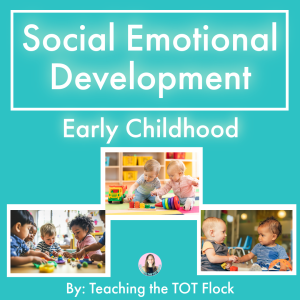
Social emotional development early childhood starts with a baby cooing and ends in collaborative play. How does one transition from simple social interactions to more complex and multifaceted social interactions? These interactions involve genetics, experiences, and family interactions to help build these vital relational skills. Many skills contribute to the growth of social-emotional learning. You might be thinking, What exactly is social emotional development? It’s the process in which individuals manage and express emotions while interacting with others and building relationships. Some key benefits of social growth are: self-awareness, self-confidence, social awareness, and decision-making skills.
social emotional development in infants
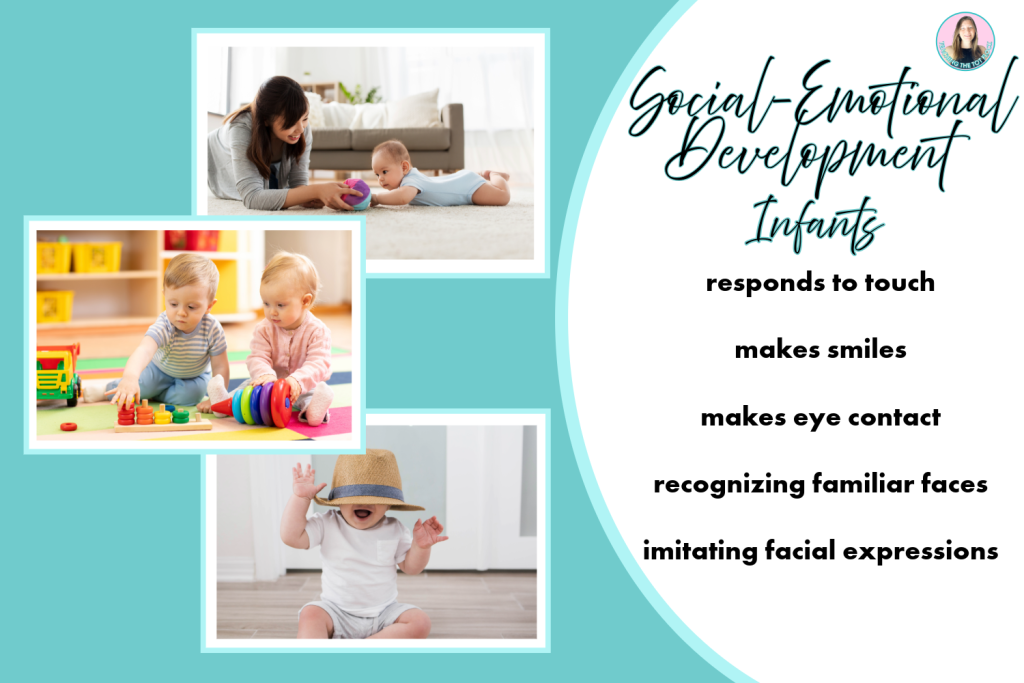
Social emotional development in infants has two main components: relational attachment and social communication. Some of the stages for attachment and relationships are responding to touch, making smiles, showing signs of eye contact, recognizing familiar faces, and imitating facial expressions. Older infants can also show signs of attachment by seeking comfort, showing signs of stress with separations from familiar people, and using gestures like waving to communicate with those around them. Infants can show a few emotions at this age: happiness, stress, and interest. They also have different cries for different needs and can pick up on emotional cues from others. The latter in the class can have a negative impact when a baby sees another baby cry, and then they begin to cry.
social emotional development in toddlers
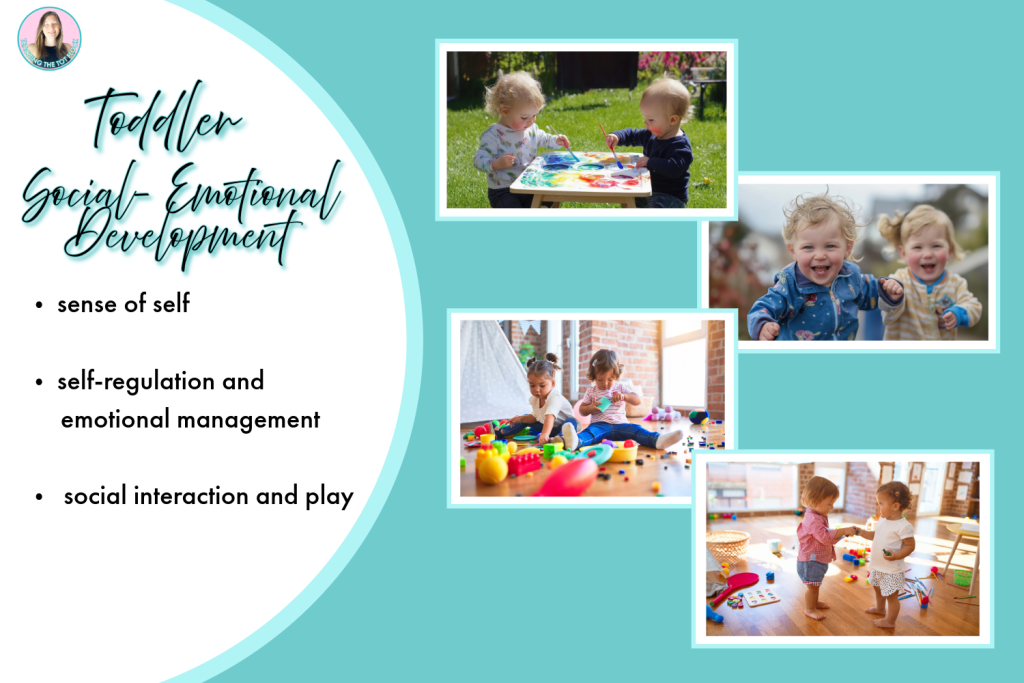
Social emotional development in toddlers has three main components: sense of self, self-regulation and emotional management, and social interaction and play.
The sense of self stage is when a child learns who they are and can recognize themselves in photos and mirrors. This is also when children start to develop their sense of independence and ownership of objects. The beginning stages of helping and imitation of simple chores, such as cleaning and putting on clothes, start. Children also start to learn their boundaries and start to challenge those boundaries with their caregivers.
During the emotional management and self-regulation stage, a child can show a range of emotions to convey how they feel such as fear, embarrassment, guilt, or pride. During this stage, you might start to see tantrums as a form of communication. Teaching coping skills during this time can help teach self-soothing skills. The use of a blanket when sad or holding a stuffed animal can help to self-regulate these big emotions. Also, giving children the words to use in the moment and modeling how to respond positively is encouraged.
Social interaction and play a huge components of development in toddlers. Children learn through parallel play with is next to other children. Children will follow the simple imitation of play from others and adults. This is where modeling how to play with toys is helpful for children to learn how specific toys work. Towards late toddlerhood, we start to see the emergence of cooperative play. Cooperative play is the sign of interacting with each other, such as chasing on the playground or simply sharing a toy.
social emotional development in preschool
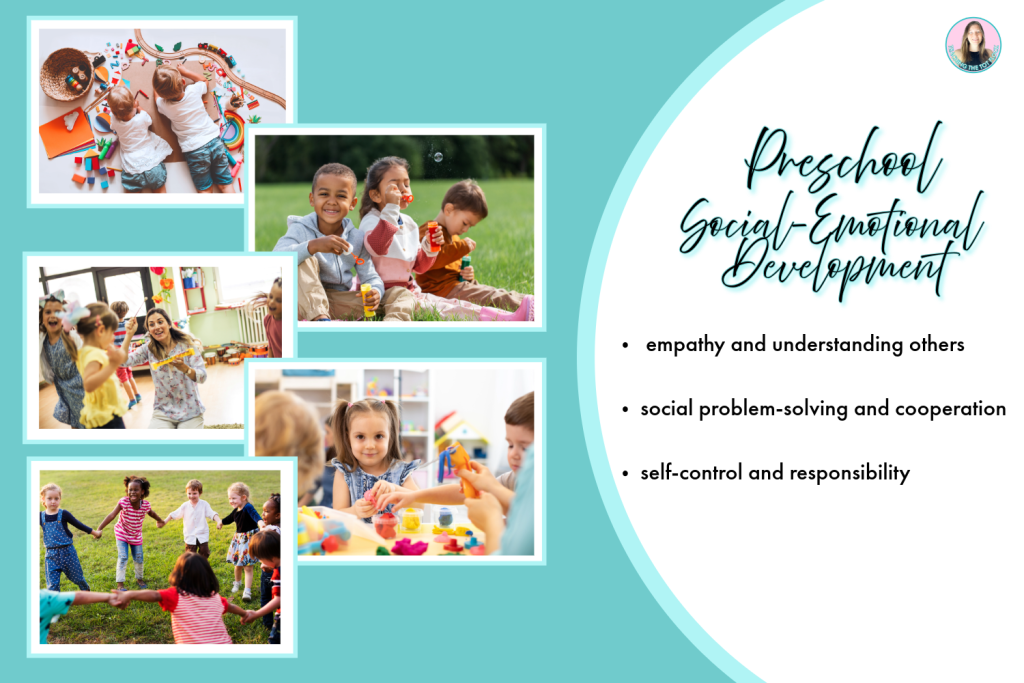
Social emotional development in preschool has three main components: empathy and understanding others, social problem-solving and cooperation, and self-control and responsibility. During this stage of life, children learn to control their emotions within group interactions, build their pretend play skills, learn teamwork, and communication skills. In the empathy and understanding others phase of development, children learn to identify feelings, show concern when others are upset, and learn how to understand others’ perspectives during play. During complex play, children learn cooperative skills in the social environment. During these interactions with other children learn to follow the rules of play, learn how to resolve conflicts, and build friendships. These skills, as they develop, will provide the skills needed to have more complex play structures in group settings.
In the area of self-control and responsibility, children will learn how to limit impulsive behaviors, build responsibility with tasks given to them, and adjust their behavior in social situations when needed. Children also learn the difference between reality and fantasy play.
During preschool, these skills are developed, and play looks like play. The foundations of play are given during the toddler years and mastered during preschool. As children get older, their play becomes more complex, more imaginative, and can last for days when allowed.
the importance of social emotional development in early childhood
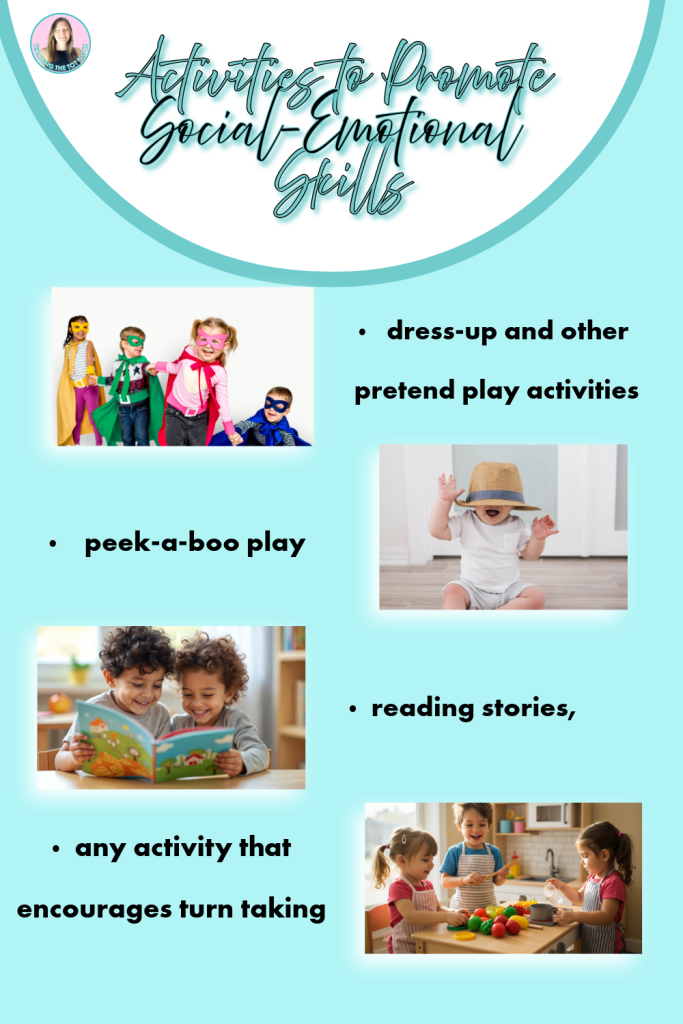
The importance of social emotional development in early childhood is to understand the interconnection of skills in cognition, language, and physical development. These skills are developed in a congruent manner. The role of the caregiver and teacher is to foster positive relationships, develop emotional skills, and model positive behavior in interactions with others. Giving children a positive start to their social development is the best start that a parent or caregiver can give to a child. Social interactions are a lifelong and daily way of life. By instilling these skills early, we can build strong relationships in the future. Some activities that can help strengthen these skills are participating in peek-a-boo play, reading stories, and using dress-up and other pretend play materials. These activities help build back-and-forth skills and imagination.
Related Articles
Promoting Social and Emotional Health
https://www.naeyc.org/resources/pubs/yc/mar2018/promoting-social-and-emotional-health
Social and emotional Development
https://www.naeyc.org/resources/topics/social-and-emotional-development
Tips for Promoting Social Emotional Development
https://www.zerotothree.org/resource/tips-for-promoting-social-emotional-development
Building Positive Relationships With Young Children
Building Social Emotional Skills at Home
https://www.naeyc.org/our-work/families/building-social-emotional-skills-at-home